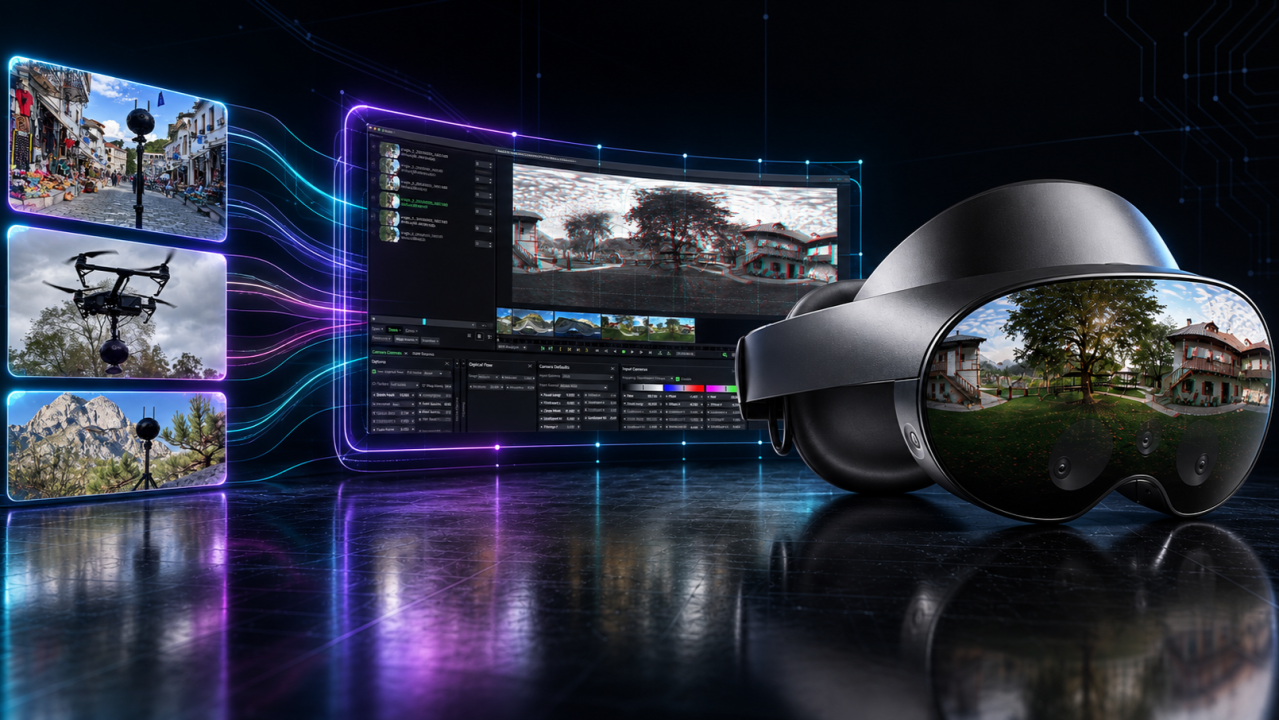
A hologram can make people stop and look. A $300 VR headset can take someone into an unfamiliar world. An interactive installation can turn a passing visitor into an active participant.
Each creates an opportunity. What we do with that opportunity determines whether the experience communicates anything meaningful.
Across entertainment and media, technology often becomes the starting point of a creative conversation. We discover a new tool, see what it can do, and begin imagining where we could use it.
That curiosity is valuable. But there is another question that deserves equal attention:
What do we want someone to understand, feel, or remember—and why would this technology help?
The answer gives the tool its context.
Context includes the audience, the environment, the story, and the moment in which an experience happens. It connects a technical capability to a human purpose.
Consider a hologram at an event. Its presence might create surprise and attract attention. But imagine that the event explores cultural memory, and the hologram brings an archival performance into a space where a new generation can encounter it. The technology now has a role within the story. Its relationship with absence, presence, and time becomes part of the message.
The same thinking applies to a modest VR headset. Imagine using one to help visitors experience the scale and atmosphere of a proposed performance venue. The value comes from helping them understand something that is difficult to communicate through a floor plan or a paragraph.
In both examples, the creative advantage comes from the relationship between the tool and the idea.
A message can also be a feeling
Communication in entertainment and media extends beyond the words an audience reads or hears.
Sound can create anticipation. Light can direct attention. Scale can make someone feel small, powerful, exposed, or connected. A change in perspective can invite someone to reconsider their relationship with a subject.
These sensory choices carry meaning, even when there is no explicit statement attached to them.
An experience might communicate a literal message: “This is how this space will work.”
It might also communicate through sensation: “This is what it could feel like to be here.”
Sometimes both happen together. The audience understands the information and feels its significance.
That makes the design of the experience part of the communication itself. Every choice—what people see first, how they move, what they hear, how much control they have—shapes their interpretation.
Give the technology a clear role
A useful creative process begins by defining the intended effect.
Who are we speaking to? What matters to them? What should they take away? Where will they encounter the experience, and how much attention can they realistically give it?
Then we can choose the medium and give each tool a specific job.
Perhaps immersion helps someone understand a perspective. Perhaps interactivity gives them a sense of agency. Perhaps a carefully timed visual effect makes a key moment memorable. In another setting, a simple projection and a well-told story may do everything the idea needs.
The level of technical complexity follows from the purpose.
This is where creative judgment matters: understanding what a tool contributes, how it fits the setting, and whether the audience can make the connection we intend.
At Blacklight Media & Innovations, this is the relationship we want to explore between technology and communication. New tools expand our creative possibilities. Context helps us turn those possibilities into experiences with purpose.
The creative work is in making the technology mean something to the people experiencing it.
Originally published by Blacklight Media & Innovations on LinkedIn.